What We Learned at GTC Berlin 2026 - Part 1
Secure Agentic AI: What Does NVIDIA OpenShell Mean for Enterprise Infrastructure?
Translation by AI(GPT-6)
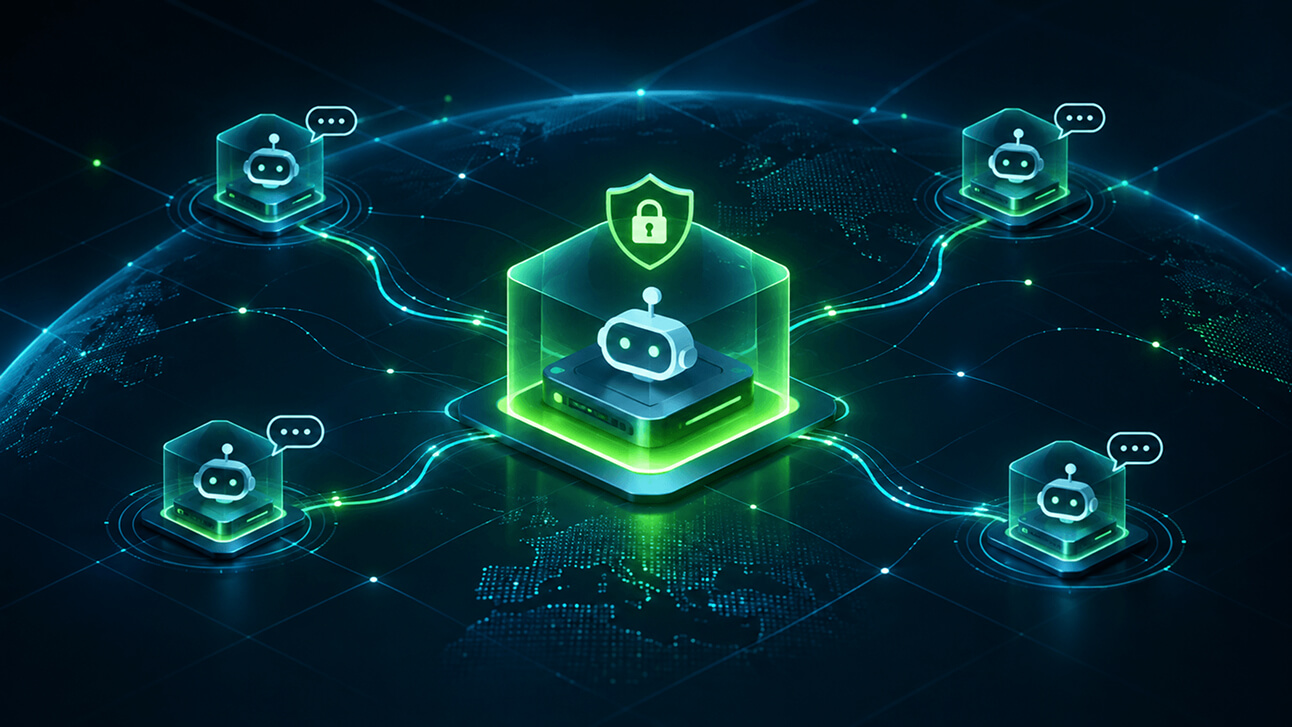
AI agents can use an organisation's knowledge and tools to perform tasks across multiple steps. This creates opportunities for new workflows but also introduces new requirements for security and hardware. At GTC Berlin, NVIDIA presented the OpenShell Reference Architecture – an architecture designed to run AI agents within boundaries controlled by the organisation.
For us at Nextron, this was a key takeaway from GTC: As AI gains greater autonomy, control over access, execution, and operations must evolve alongside it. Organisations planning AI infrastructure should therefore consider the entire workflow in which their agents will operate.
What Is Agentic AI – and Why Does It Require Greater Control?
Agentic AI refers to systems that can work towards a goal through multiple steps: retrieving information, selecting tools, performing actions, and evaluating results before continuing.
During his keynote presentation, NVIDIA CEO Jensen Huang described five key components of an AI agent:
- The model interprets the task and provides reasoning capabilities.
- The agent framework, often referred to as the “harness”, coordinates tasks and manages memory.
- A sandbox isolates the environment in which the agent framework operates.
- Knowledge provides access to relevant information.
- Tools enable the agent to perform actions and computations.
Consider a hypothetical example of an AI agent assisting a service department. It could consolidate error reports, retrieve technical documentation, and prepare a work order. The organisation must then determine which systems the agent can read from, where it can write data, and which actions require approval.
This transition from providing answers to performing tasks is what makes security architecture so important.
NVIDIA OpenShell Defines What AI Agents Are Allowed to Do
NVIDIA OpenShell is an open-source software environment that enforces policies governing agent access and execution. Its fundamental principle is that access must be explicitly granted. Agents should only be able to reach the resources required to complete their tasks.
Isolation through sandboxing restricts access to files and processes. Control mechanisms operating outside the agent's own software environment evaluate network requests and manage access to the credentials required for authorised operations. Decisions to allow or deny access are logged.
For organisations, this means security policies can be enforced independently of the instructions an agent follows. Instructions to handle data carefully are therefore supported by technical restrictions on what the agent can actually do.
However, OpenShell must still form part of an organisation's broader security strategy. Isolation does not guarantee that an agent's decisions are correct. An agent can make mistakes even within its permitted access rights. Testing, approvals, and access to business systems must therefore reflect the potential consequences of each task.
BlueField Adds Independent Monitoring and Enforcement
At GTC Berlin, NVIDIA expanded the discussion beyond OpenShell software to a reference architecture for agentic AI. This combines Vera Rubin for model execution, Vera processors for agent frameworks and tool usage, and BlueField-4 with NVIDIA Sentry security software.
BlueField-4 is a DPU – a dedicated processor designed for networking and infrastructure tasks, among other functions. Within this architecture, it provides security functions with a separate hardware environment beyond the agent's control. Sentry can monitor activity and use BlueField to enforce policies and isolate agents when violations are detected.
The value lies in this separation: Security controls operate independently within the infrastructure. This becomes particularly relevant when many agents work simultaneously with an organisation's data and systems.
The complete architecture addresses different capacity and security requirements than those of a smaller development environment. BlueField-4 is therefore not a general requirement for getting started with local AI agent development.
Hardware for Agentic AI: Plan for the Entire Workflow
For Nextron, an important implication is that infrastructure must be sized according to more than just model size. An agent may alternate between model inference, code execution, data access, and waiting for responses from other systems. Running multiple agents simultaneously increases demand across different parts of the infrastructure.
Before selecting a system, organisations should therefore consider:
- Models and GPU memory: Which models will run locally, how much context will they require, and how many concurrent requests must be supported?
- CPU and system memory: Which tools and isolated software environments will the agents use?
- Storage and networking: Where is the knowledge base located, and how will agents retrieve data?
- Access and operations: How will identities, approvals, logging, and monitoring work together?
Dedicated AI infrastructure allows organisations to determine where models run and where data is processed. Maintaining this control requires appropriate configurations and operational procedures, including when agents connect to external services.
A practical starting point is to select one valuable workflow, limit the agent's permissions, and measure both output quality and resource utilisation. This provides a concrete foundation for future investments.
From Local Development to Production AI Servers
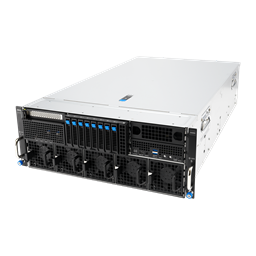
Nextron provides AI infrastructure from NVIDIA, Supermicro, and ASUS. The right platform depends on whether you are developing your first agent, sharing computing capacity within a technical team, or deploying a service for a large number of users.
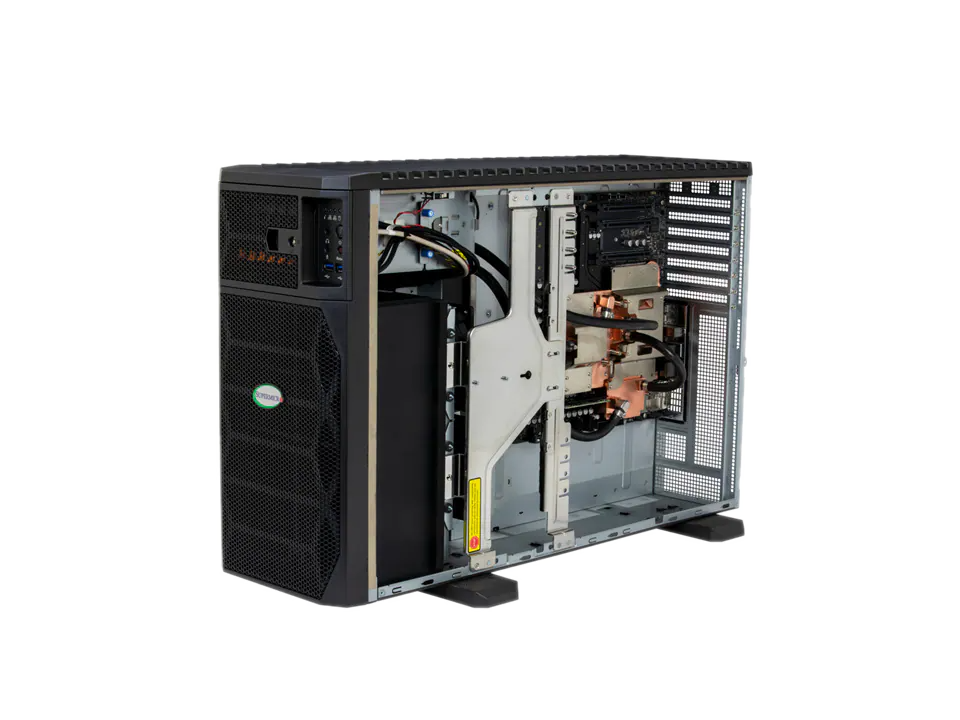
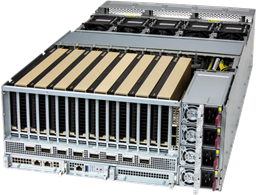
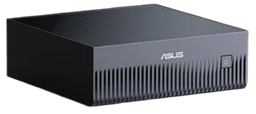
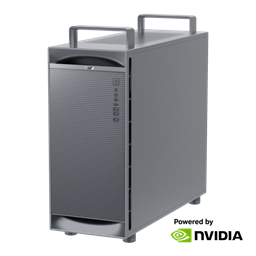
NVIDIA DGX Spark and ASUS Ascent GX10 are potential starting points for local development and experimentation. For larger models and more demanding local workloads, DGX Station-class platforms, such as ASUS ExpertCenter Pro or Supermicro Super AI Station, may be suitable. GPU servers from Supermicro and ASUS provide additional options when requirements call for a centralised server environment.
Hardware selection must also consider software compatibility, integrations, and security requirements. These platforms offer different capabilities and do not automatically represent the complete OpenShell Reference Architecture.